
What Should Beginners Know Before Using the ViaBTC Mining Guide?
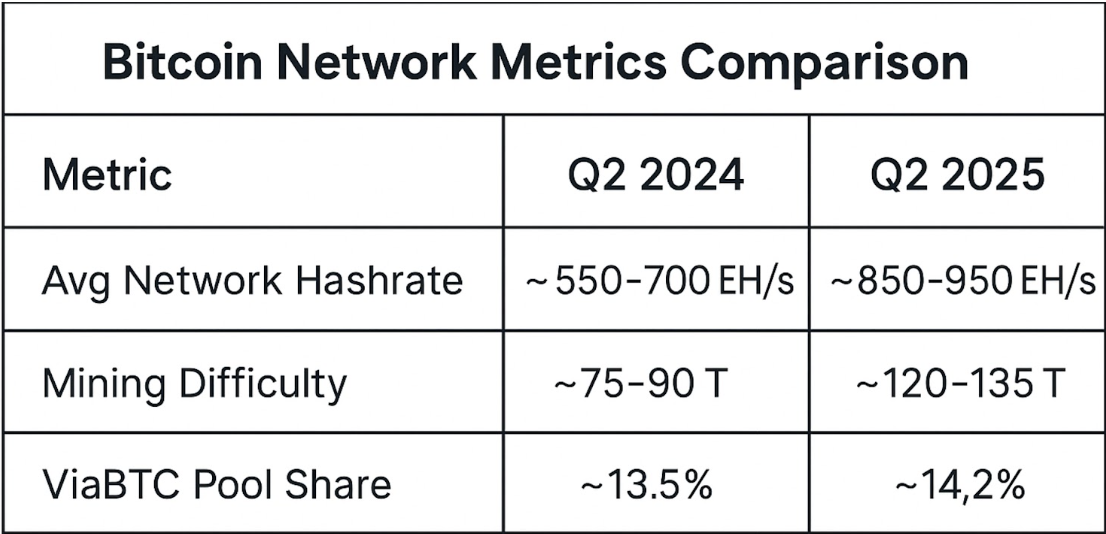
Before using a ViaBTC mining guide, beginners should check hardware compatibility, electricity price, pool payment rules, network difficulty, accepted hashrate, payout settings, and cooling costs. A 3.5 kW ASIC running 24 hours uses 84 kWh per day, or 2,520 kWh in 30 days; at $0.10/kWh, electricity alone costs about $252 monthly. A 5% difference in rejected work or uptime can also change the amount credited by a pool. Mining results are never fixed: difficulty, block rewards, transaction fees, coin prices, and pool-side performance change over time, so setup instructions should be paired with cost records and regular performance checks.
A mining guide becomes useful only after the miner and algorithm have been matched. Litecoin uses Scrypt, so a SHA-256 Bitcoin ASIC cannot simply be redirected to Litecoin and produce useful Scrypt hashrate. Before entering any pool address, confirm the exact ASIC model, its rated hashrate, rated wattage, firmware version, and supported algorithm. In 2026, specifications should be checked against the manufacturer's current documentation rather than an old setup video because firmware and operating modes can change after release.
Hardware specifications also need to be converted into operating costs. A miner rated at 3,500 W consumes 3.5 kWh every hour and 84 kWh over 24 hours. At $0.06/kWh, that is $5.04 per day; at $0.10, it becomes $8.40; at $0.15, it reaches $12.60. Across a 30-day month, the same machine therefore spends about $151.20, $252, or $378 on electricity before ventilation, hosting, networking, maintenance, or downtime.
| Miner power | Electricity rate | 30-day energy use | Approx. 30-day power cost |
|---|---|---|---|
| 2.5 kW | $0.10/kWh | 1,800 kWh | $180 |
| 3.5 kW | $0.10/kWh | 2,520 kWh | $252 |
| 4.0 kW | $0.10/kWh | 2,880 kWh | $288 |
Power cost leads naturally to efficiency because two miners producing different hashrates should not be compared by hashrate alone. If one machine uses 3,500 W and another uses 3,000 W, the first consumes about 16.7% more electricity. The higher-power unit is not automatically worse; its additional hashrate may justify the extra consumption. Compare watts, pool-side hashrate, and energy cost over the same 24-hour or 7-day period rather than comparing manufacturer hashrate figures in isolation.
A miner displaying high local hashrate is not necessarily delivering the same amount of accepted work to the pool. Pool-side records matter because payment accounting is based on submitted mining work under the pool's applicable rules.
That distinction becomes important when configuring a ViaBTC LTC Mining Pool connection. Beginners should verify the current Litecoin pool information on ViaBTC before entering server details because pool endpoints, supported services, payment options, and interface instructions can be updated. Litecoin has operated since 2011, and its proof-of-work system uses Scrypt; equipment must support that algorithm regardless of which pool account receives the work.
Once the equipment is compatible, worker organization deserves attention. A worker identifies an individual mining device or mining process under the account, so names such as garage01, rack02unit04, or siteA07 are easier to manage than unrelated labels. With 20 miners, a structured naming method can shorten the time needed to identify an offline unit because the pool dashboard can be matched to a physical location without checking every machine.
Pool-side statistics should then be compared with the miner's local panel. A local reading of 1 GH/s and a short-term pool reading below 1 GH/s do not automatically indicate a fault because pool estimates depend on submitted shares over time. A persistent 10% difference across a longer observation period deserves investigation, especially when rejected shares, network interruptions, thermal throttling, or hardware errors appear at the same time.
Rejected work deserves separate attention because nominal hashrate does not describe how much work the pool accepts. If a miner submits 10,000 shares and 200 are rejected, the rejection proportion is 2%. If 1,000 are rejected, it is 10%. The second machine may display normal local performance while delivering substantially less accepted work, so beginners should record accepted and rejected statistics together rather than saving only screenshots of the advertised hashrate.
Possible causes should be checked in a practical order:
-
Compare the pool's accepted hashrate with the miner's local reading over at least 24 hours.
-
Check whether rejected work rises above its usual percentage after configuration changes.
-
Review network stability before changing frequency or power settings.
-
Compare device temperatures before and after a hashrate drop.
-
Record firmware changes with dates; a 2026 configuration should not be judged against an undocumented older setup.
Network quality matters because mining equipment needs a stable connection to submit work. Bandwidth consumption is usually less important than continuity and latency. A machine disconnected for 72 minutes during a 24-hour period has already lost 5% of that day's operating time. Repeated short interruptions can be harder to notice than one long outage, making pool-side worker history more useful than checking whether the miner happens to be online at a single moment.
Uptime therefore belongs beside hashrate in every performance record. A miner rated at 1 GH/s but available only 90% of the month has less productive time than an identical unit running at 98%. Across a 30-day month, 90% uptime represents about 648 operating hours, while 98% represents about 705.6 hours—a difference of 57.6 hours before rejected work is considered.
Heat can create another gap between advertised and actual performance. A 3.5 kW ASIC converts most of the electricity it consumes into heat, so one continuously operating machine introduces roughly 84 kWh of energy into its environment each day. Putting several units in an enclosed room without sufficient exhaust capacity can raise intake temperatures, increase fan speeds, and contribute to throttling or shutdowns. Cooling requirements should therefore be planned before scaling from 1 machine to 10.
Electrical infrastructure needs the same treatment. Ten 3.5 kW miners represent 35 kW of continuous equipment demand before supporting equipment is counted. A beginner should not estimate circuit capacity from the number of available wall outlets. Voltage, current, circuit ratings, connectors, cable specifications, local electrical codes, and continuous-use requirements need review by a qualified electrician where appropriate. Mining guides explain pool configuration; they do not replace electrical installation standards.
After stable operation has been established, payment rules need to be understood before comparing daily figures. Mining pools can use methods such as PPS, PPS+, PPLNS, or other arrangements, and treatment of block rewards, transaction fees, pool charges, and settlement timing can differ. A 24-hour payment comparison can therefore produce a poor impression of longer-term performance when the underlying methods allocate mining income differently.
Beginners should read the currently published ViaBTC terms for the selected coin rather than relying on a percentage quoted in an older article. Pool fees and supported payment methods are service details that can be revised, while network conditions can change independently. A fee difference of 1 percentage point is easy to calculate, but it should be considered alongside accepted hashrate, payment method, reliability, payout threshold, and actual credited amounts.
Wallet configuration comes after understanding payment rules because a payout is useful only when it reaches the intended destination. Verify the asset and receiving address before saving withdrawal information. If a payout destination contains dozens of characters, checking only the first four is not enough. Account security also matters: use a unique password and available multi-factor authentication, particularly when accumulated mining balances can be withdrawn from the account.
A useful first payout is a small, verified payment. Confirm that the receiving service supports the asset and that the transaction arrives as expected before allowing a larger balance to accumulate.
Revenue records should then be separated from operating profit. Suppose a miner produces $11.50 of gross credited mining revenue during a day while electricity costs $8.40. The remaining $3.10 is not necessarily profit because cooling, hosting, equipment depreciation, repair costs, pool charges, and downtime may still apply. If gross revenue falls by 15% while the electricity rate stays unchanged, the margin can shrink much faster than the revenue percentage suggests.
Mining difficulty adds another variable. A machine can maintain exactly the same physical hashrate while receiving a different amount of cryptocurrency as total network competition changes. Block reward rules also change according to each network's protocol schedule. Litecoin, for example, has historically reduced its block subsidy through scheduled halvings, so a profitability estimate based on conditions from 2022 or 2023 should not be reused without current network data.
Market price introduces a separate measurement issue. Mining output should first be recorded in the mined asset, then converted into a fiat value using a consistent timestamp or accounting method. If a miner receives the same number of coins on two days but the market price falls 20%, fiat-denominated revenue falls approximately 20% even though the equipment itself has not performed worse. Mixing machine performance with asset price movement makes troubleshooting harder.
A simple operating record can keep the measurements separate:
| Metric | Suggested interval | What to compare |
|---|---|---|
| Pool-side hashrate | Daily / 7-day | Local hashrate |
| Accepted/rejected work | Daily | Previous 7 days |
| Electricity use | Daily or monthly | Metered kWh |
| Uptime | 24-hour / 30-day | Target availability |
| Gross mining credit | Daily | Coin amount and fiat value |
| Device temperature | Daily | Normal operating range |
Records become more useful after at least 7 to 30 days because single-day results contain more short-term variation. If a miner shows 97% uptime during one week and 99% during the next, the difference can be investigated against maintenance logs, network outages, temperature records, and firmware changes. A written record also prevents memory from becoming the basis for judging whether a configuration actually improved performance.
Scaling should follow measured operation rather than advertised output. If one 3.5 kW machine costs $252 per 30 days at $0.10/kWh, 10 identical units consume about 25,200 kWh and cost approximately $2,520 under the same simplified assumptions. Power distribution, exhaust airflow, noise, replacement fans, network equipment, and physical access also become larger operational considerations as machine count increases.
For that reason, a beginner can learn more from one stable machine observed for 30 days than from several machines configured at once without records. Use the ViaBTC guide to establish the correct pool connection, confirm accepted work, verify a payout, record electricity consumption, and compare local performance with pool-side statistics. Only expand after the measured numbers—not the manufacturer's headline specifications—fit the available electricity, cooling, maintenance, and operating budget.
Now booking 2025 & 2026 brides.
Sixty-eight percent of this season's dates were reserved by January. Hold a conversation with the studio before the calendar closes.
Check My Date & Get a Quote